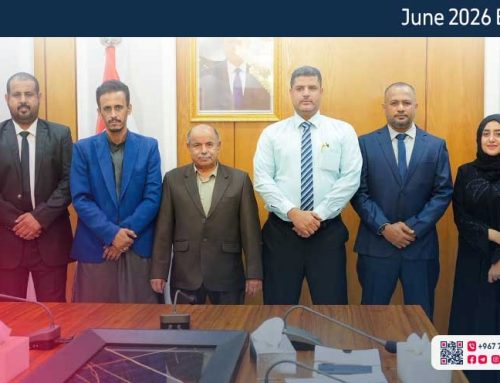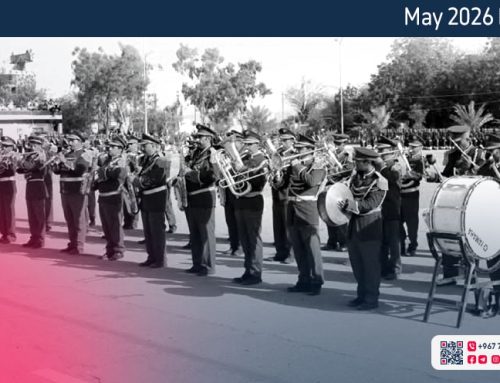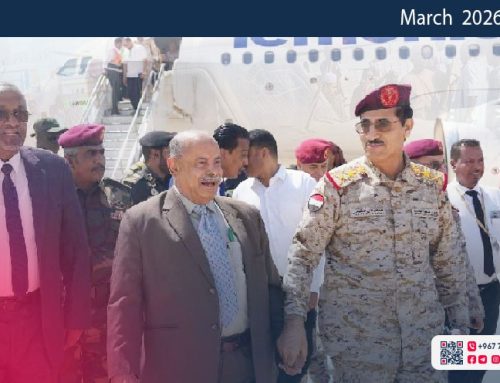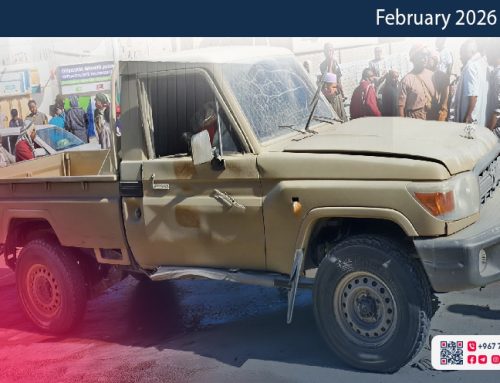

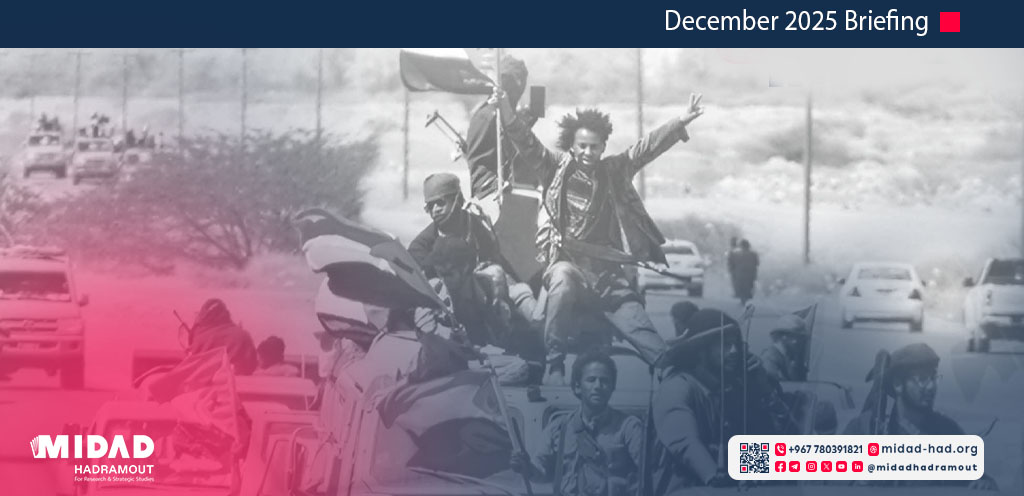
December represented a turning point in Hadhramout, with consequences that extended to the wider Yemeni scene. The political polarization that had been growing for months between the Hadhramout tribal alliance and the Southern Transitional Council turned into armed conflict, with an uncertain outcome. Developments on the ground affected citizens’ daily lives through the closure of Seiyun Airport and increasing power cut-offs lasting for hours in Wadi Hadhramout, against a backdrop of clashes affecting the area surrounding oil facilities.
Attempts at calm and dialogue sponsored by Saudi Arabia have failed to prevent clashes from breaking out. In this context, a high-level Saudi military delegation headed by the chairman of the Saudi Special Committee, Mohammed Al-Qahtani, tried to calm the situation and reach arrangements for the withdrawal of Southern Transitional Council forces from the eastern governorates. However, these efforts faced clear obstacles, amid accusations that the Southern Transitional Council (STC) was being intransigent and even obstructing the delegation’s convoy from reaching Wadi Hadhramout. Despite initial signs of a possible understanding—including a statement by the governor of Hadhramout that STC had agreed to withdraw its forces during the first week of December—the reality on the ground showed that the chances of an agreement were limited and that mistrust continued.
The forward movement of STC forces and their seizing control of areas in Hadhramout and Al-Mahra has marked a transition for the eastern governorates to an unusual stage, as relative stability has turned into a state of anxiety and fear. STC has raised the slogan ” restoring the state and fighting terrorism and smuggling”, and gathered forces from outside Hadhramout to confront what it described as a rebel of Hadhramout Tribes Confederacy and an unofficial recruitment movement in the oil-rich governorate, which led to a new chapter of fighting.
STC didn’t just accuse Hadhramout Tribes Confederacy of rebellion, but also linked its actions to support from terrorist organizations. To reinforce this claim, it used religious rhetoric against the confederacy ‘s actions, calling them a rebellion against the ruler. In areas loyal to it, STC called for an open sit-in to demand the declaration of separation and the establishment of the Arab South State. Several southern cities, including Aden, Mukalla, and Seiyun, have seen supporters gather in this context.
In return, Hadhramout Tribes Confederacy has entered the battle, raising the slogan of self-rule and the rights of Hadhramout, confirming the right of the people of the governorate to run their own affairs. The Confederacy has declared that the transitional forces are unwelcome invaders from outside the governorate, aiming to seize control of its resources and take advantage of them.
However, the rapid defeat of Hadhramout Tribes Confederacy forces due to the significant difference in military capabilities, it maintained the core of its forces and announced its commitment to the truce agreement reached between the Confederacy and the local authority regarding oil facilities. Nevertheless, a subsequent clash between the transitional forces and the coalition undermined the implementation of the understandings. At the beginning of December, the Confederacy warned against any military escalation and affirmed that its political options were resistance and defense of Hadhramout. It continued to maintain this position despite military pressure, ending the year by demanding the withdrawal of the transitional forces, which it described as an occupying force.
Locally, despite the announcement by a number of government officials—including ministers, deputy ministers, and governors— – their support for the Transitional Council, the majority of the legitimate government has committed to the decisions of the President of the Presidential Leadership Council, Rashad Al-Alimi, calling for the withdrawal of the Transitional Council’s forces from the eastern governorates, including the two houses of parliament. This month witnessed political activity and continuous pressure from Al-Alimi to withdraw the forces, along with Saudi pressure at the political and military levels through communications, statements, and official declarations; the most one was the demand by Defense Minister Khalid Bin Salman to withdraw the transitional forces from the eastern governorates and end the escalation.
The most significant event was the meeting of the National Security Council chaired by the President of the Presidential Leadership Council, Dr. Rashad Al-Alimi, which concluded with a request for Saudi intervention and the taking of all necessary military measures to protect civilians in Hadhramout and support government forces in imposing calm. This shift was seen as a transition from the negotiations that had dominated most of the month to a more stringent approach, which led to subsequent developments on the ground.
This request was rejected by half of the members of the Presidential Leadership Council. Four members of the Presidential Leadership Council have issued a statement rejecting Al-Alimi’s decision, including Eidros Al-Zubaidi, Abu Zarah Al-Mahrami, Faraj Al-Bahsani, and Tariq Saleh, and questioning his legal authority. The four members represent the UAE-supporting bloc in the council.
These events led to a political and media escalation between Saudi Arabia and the UAE. A Saudi statement accused the UAE of supporting the Transitional Council in order to destabilize Yemen and encourage separatist demands, while the UAE denied these accusations and affirmed that it does not support the Transitional Council with weapons secretly or independently of the coalition.
The Saudi statement also included a demand for Emirati forces to withdraw from Yemen within 24 hours, in conjunction with Al-Alimi’s announcement of the cancellation of the joint defense agreement with the UAE. Later, the UAE announced the complete withdrawal of its forces from Yemeni cities. In the same context, Al-Alimi declared a state of emergency in all Yemeni cities for a period of ninety days.
Despite the dominance of political and military developments in Hadhramout, this month also witnessed an important event, which was the conclusion of an agreement in Muscat between the legitimate government and the Houthi group to exchange prisoners. According to the announcement, this agreement includes, the release of about 2,900 prisoners detained by both sides, including Islah Party leader Mohammed Qahtan. This development is considered a breakthrough that may contribute to bringing the parties closer together, easing tensions, and enhancing opportunities to move toward a more sustainable peace process.
Top News:
December 1:
- Hadhramout Tribes Confederacy: Seizing control of Petromsila as a proactive measure in response to the entry of forces from outside the governorate.
December 2:
- Hadhramout parties urge the president and the Quartet to intervene to prevent the governorate from slipping into violence.
- Political forces in Hadhramout are rejecting any incoming forces and calling for urgent presidential action.
December 3:
- Hadhramout Governor meets with Saudi military delegation after Transition Forces take control of Hadhramout and Al-Mahra.
December 4:
- Hadhramout Governor: Transitional Council pledges to withdraw its forces from outside the governorate.
December 5:
- A Saudi-Hadhrami meeting in Al-Mukalla calling for the immediate withdrawal of non-Hadhrami forces and handing over the sites to the National Shield.
December 6:
- The Transitional Council begins an “open sit-in” to demand the separation of South Yemen.
December 7:
- Al-Alimi accuses Transitional Council of escalation in the eastern governorates and confirms the existence of “grave violations.”
- Head of the Yemeni Leadership Council: What happened in the eastern governorates is a dangerous escalation that imposes a parallel reality by force.
December 8:
- Houthis accuse Saudi Arabia and UAE of a plan to divide Hadhramout and Al-Mahra.
December 9:
- Saudi-Iranian-Chinese statement affirms support for a comprehensive political solution in Yemen.
- Bin Habrish: We will remain standing firm on our land until the militias leave.
December 10:
- Parliament calls for the cancellation of “unilateral measures” in Hadhramout and Al-Mahra to avoid sliding into danger.
- The governor of Abyan orders the raising of separatist flags on facilities and institutions.
December 11:
- Eastern Governorates Council: We reject any military gatherings, considering them a threat to the social structure.
- Seiyun International Airport is closed, and flights are suspended.
- The United Nations affirms its commitment to Yemen’s unity.
December 13:
- Bin Habrish praises the bravery of those wounded in Al-Karama Battle and affirms his commitment to continuing to defend Hadhramout.
December 14:
- The Transitional Council rejects the Saudi-Emirati delegation’s request to pull back from the field.
December 15:
- A leader in STC confirms “full Emirati support” for taking control of Hadhramout and Al-Mahra.
December 16:
- Hadhramout Tribes Confederacy reveals ongoing kidnappings and warns of an explosion in the situation.
December 18:
- Al-Alaimi insists on the need for a comprehensive investigation into violations committed by the Transitional Council in Hadhramout.
- Al-Khanbashi: Hadhramout preserves its identity and did not join any entity, and we’re asking STC to leave.
December 21:
- Al-Alaimi orders measures to be taken against government officials who issued statements of rebellion and demanded separation.
December 30:
- Saudi Arabia criticizes the UAE and calls for its forces to leave Yemen within 24 hours.
- Hadhramout: Local authorities announce support for the withdrawal of the UAE and declare a state of emergency in Yemen.
- The National Defense Council approves the end of the UAE’s presence in Yemen and considers the actions of “STC” to be a clear rebellion.
- Hadhramout Tribes Confederacy announces its full support for the decisions of the President of the Presidential Leadership Council.
- UAE denies supporting the rebellion of the Transitional Council militia in Hadhramout and Al-Mahra.
- US-Saudi-Emirati discussions regarding developments in Yemen.
Political and military changes in Hadhramout and Al-Mahra have clearly affected economic activity and basic services. The most significant impact since the beginning of the clashes has been the collapse of the electricity system in Wadi Hadhramout, with a number of cities entering widespread darkness after Petromasila and Al-Jazira Power Stations stopped operating due to the interruption of gas supplies from the company.
Petromasila also announced the complete suspension of production and refining operations due to tensions and clashes in the surroundings of oil facilities, which is expected to have a particular economic impact on Hadhramout. The disturbances have extended to some civilian facilities, with Seiyun Airport suspended due to the security situation. Meanwhile, local platforms have reported rumors of the suspension of Aden Port, before the government denied the validity of these reports.
At the national level, the events of December had a direct impact on the pace of economic reforms led by the government. The crisis imposed a temporary suspension of a number of reform measures and programs, either because institutions were involved in managing the emergency fallout or because some operational, supervisory, and logistical functions were disrupted. and logistical functions, effectively suspending part of the reform process until tensions subside, the government resumes its normal functions, and the relevant facilities and departments resume regular operations.
The impact of this disruption goes beyond the temporary time dimension to have a long-term effect on the credibility and sustainability of the reform. When procedures are suspended for a limited period, the margin of uncertainty expands, speculation increases, financial discipline declines, pressure on the exchange rate and import costs increases, and confidence in the state’s ability to protect sovereign resources and manage the economy in isolation from turmoil erodes. Importantly, delays in reform may create a gap between what has been announced and what has actually been achieved, opening the door to increased public discontent with any subsequent corrective measures and increasing the cost of resuming reforms after the crisis. Therefore, restoring the reform process requires, in addition to a return to normal government performance, a package of rapid measures to compensate for the period of disruption, the most important of which are stabilizing resources, reactivating monetary stability tools, and restoring confidence through clear messages to the market and partners about the priority of reform, linking it to security and administrative guarantees that prevent a repetition of the disruption.
Top News:
December 1:
- Wadi Hadhramout: The electricity system is almost completely shut down.
- Petromasila announces the complete suspension of production and refining operations.
December 2:
- Presidential orders to pay three months’ salaries after the sit-in by wounded and disabled people in Marib and Taiz.
December 5:
- The United Nations announces a funding shortfall of $1.88 billion for relief efforts in Yemen.
December 7:
- Aden: A sharp rise in domestic gas prices and accusations that networks are manipulating official quantities.
December 9:
- The United Nations is asking for $2.5 billion to save 10.5 million Yemenis from starvation.
- An agreement is signed to rehabilitate the historic port of Al-Mokha and operate it at a cost of $138.9 million.
December 10:
- Transitional Counsel in Seiyun continues distribution of food baskets.
December 13:
- International report warns of unprecedented economic deterioration in northern Yemen.
December 17:
- Government denies rumors that Saudi Arabia has suspended ship permits to Aden port.
December 21:
- UN report: One-third of families in Houthi-controlled areas are suffering from hunger.
According to official statements and local reports, Hadhramout witnessed a significant acceleration in the human rights situation during December. The General Staff Headquarters said in a statement that 32 people were killed and 45 wounded from the First Military Region. The statement included accusations of violations—including the killing of wounded people and the execution of detainees—accusing the Southern Transitional Council forces. In the same context, the local authority in Wadi Hadhramout reported that civilians were among those injured as a result of the military events, and the governor of the governorate said in a television interview that citizens in some areas of the valley had been subjected to robbery. Despite the differing accounts of the parties involved, these reports reflect an increase in the risk of violations during periods of escalation and a decline in levels of civilian protection and control of armed behavior.
Outside Hadhramout, an extrajudicial execution after tribal arbitration in Shabwah sparked widespread reactions both inside and outside the country. Human rights groups called it a serious violation and an abuse of tribal arbitration traditions.
Authorities concerned with prisoner affairs also condemned the new executions announced by the Houthi group, describing them as a renewed violation of basic rights and standards of justice.
On the social level, with southern forces taking control of Wadi Hadhramout, the Southern Transitional Council began distributing food baskets to the neediest groups, which is a move where humanitarian considerations overlap with political messages about showing the ability to manage the situation on the ground and to establish a presence.
Within the broader humanitarian context, reports from international organizations continue to indicate a deterioration in living conditions throughout the country, particularly in areas under Houthi control. The crisis has been compounded by two main factors: First, the arrest of UN staff and the resulting suspension or reduction of some UN activities in those areas, which has affected large groups of people who depended on aid. Second, there has been a shortage of funding, as the United Nations has been unable to raise the resources needed to meet growing needs amid repeated indications of widespread poverty and hunger.
In another context, this month has witnessed a remarkable cultural event, represented by the inclusion of the “Hadrami Dan Session” in UNESCO’s list of intangible cultural heritage, which drew widespread attention. The release of journalist Mohammad Al-Mayahi, after a year of arbitrary detention in Houthi prisons, was one of the few positive developments during the month.
Top News:
December 4:
- The Yemeni Network for Rights and Freedoms documents serious violations in Seiyun after the Transitional Council took control.
December 10:
- UNESCO adds Hadrami Dan session to its list of intangible cultural heritage.
December 12:
- The American Center for Justice reveals that 100 people were killed in Seiyun among crimes committed by the transitional forces on the basis of “Geographical Identity.”
December 16:
- More than 24,000 new displaced persons in 2025, with Marib receiving half of them.
- No Restrictions Organization condemn the tribal killing of an illegal citizen in Shabwah.
December 17:
- The Prisoners’ Commission condemns the Houthis’ approval of death sentences against kidnapped individuals, describing it as “judicial terrorism.”
December 18:
- United Nations: Marib Gov. receives more than 5,400 internal displaced persons who left Hadhramout due to military escalation.
December 20:
- The Transitional Council begins moves to seize the residences of military personnel and civilians in Hadhramout.
December 28:
- Without restrictions, the Transitional Council is accused of racist practices affecting travelers and families.
December 30:
- The governor of Hadhramout orders intensified rescue operations after the collapse of a residential building in Rakhiya.
More than a decade after a period of relative stability, Hadhramout found itself at the end of the year facing armed clashes and internal fighting. The STC announcement of an operation called “The Promising Future” raised widespread reactions, with large forces from outside the governorate gathering under the slogan of “fighting smuggling and terrorism”, ending what it described as rebellion in Hadhramout plateau, and removing the First Military Region forces.
It was not only the transfer of military tension to the eastern governorates that was surprising, but also the speed with which large parts of Hadhramout and Al-Mahra were taken over in a short period of time, except for limited resistance from the First Military Region and the Hadhramout tribes Confederacy in highlands and around some oil facilities. The lines of contact quickly fell back amid questions about the position of the Yemeni Ministry of Defense and the coalition on the escalation.
Despite the imbalance of power, coalition forces and other tribal forces continued their resistance in several locations, including Wadi Nahb and Gail Bin Yamin, in addition to clashes in Al-Abr area, causing casualties on both sides, according to local accounts and circulating reports.
These events are accompanied by conflicting reports and a lack of clarity about the ultimate goals of the movements, especially with the deployment of National Shield forces at strategic points and vital facilities in Hadhramout and Al-Mahra for short periods before withdrawing, as well as their spread to secure some international roads near the Saudi border before returning to their positions. This deepened the state of uncertainty and anxiety among the people and local actors.
Once STC had established its presence on the ground, initial impressions were that the operation had quickly achieved its objectives, especially given the unclear position of the “The Nation Shield” on the conflict. However, this stability did not last, as mounting political and military pressure emerged, and sources spoke of warning strikes and deterrent measures on the ground, at a time when STC maintained its position and refused to withdraw its forces from the eastern governorates.
During the month, large areas of Hadhramout became the scene of repeated tensions between invasions, positioning, and withdrawals, and for the first time in years, residents heard the sounds of cannons and airstrikes. However, none of the parties was able to decisively win the battle. as the leaders of Hadhramout Tribes Confederacy, led by Amr Bin Habrish, remained at the forefront. The attack on Ghail Bin Yamin did not lead to the arrest of prominent leaders, but there were reports of the detention of a number of officers from the First Military Region and breaking in some of their houses. These indicators suggest that the escalation is likely to continue unless a clear political and security settlement is reached.
However, the most significant Saudi military intervention was the bombing of Al-Mukalla port, with a limited strike on military vehicles going to the transitional forces, which Saudi Arabia prepared to encourage the military escalation in the eastern governorates, while the UAE denied this and said that the shipment was going to the UAE forces positioned in Yemen.
On the other hand, Hadhrami Elite Forces announced that they had carried out campaigns against Al-Qaeda members in some of the valleys of Hadhramout, while the National Shield Forces announced that they had defused explosive devices on Marib-Al-Wadiah road. Despite the importance of these recent security developments, assessing their impact requires detailed data and independent verification.
Beyond Hadhramout, military escalation continued in Taiz, with periodic clashes between the Houthis and government forces, and mutual reports of battlefield casualties.
Top News:
December 3:
- Armed clashes between forces from the First Military Region and transition forces in Wadi Hadhramout.
- Transition forces take control of Arin military camp in Shabwah.
- Bin Habrish: There will be a fight if anyone approaches the oil companies’ sites.
- Transition forces take control of the most significant cities and military sites in Wadi Hadhramout.
- Transition forces arrest the commander of the 101st Air Police Brigade and a number of officers and commanders.
December 4:
- The Second Military Region announces that Hadhrami Elite Forces have taken control of the oil fields.
- A leader in Taiz: The Houthis are repairing warplanes at Taiz Airport and bringing in African mercenaries.
December 5:
- Transitional Council forces break into tribal protection camps despite assurances from local authorities and Saudi Arabia.
- 19 transition forces wounded in an attack on the tribes’ areas east of Hadhramout.
December 6:
- Hadhramout Tribes Confederacy announces the names of six martyrs who fell in clashes with the transitional forces.
- The Nation Shield Forces deploy in Al-Mahra Gov.
- The transitional forces arrest a commander of the First Military Region Command and his son.
- Four members of the “UAE-backed Giants” are killed when a bomb explodes in their vehicle on Al-Khasha’a-Al-Abr road.
December 7:
- Transition forces prevent the governor of Hadhramout from heading to Wadi Hadhramout.
- Clashes in Taiz, with the Yemeni army targeting Houthi positions in the east of the city.
December 12:
- Transition forces invade Qishn city.
December 13:
- The army announces the death of 32 soldiers in the transitional forces’ attack on the first military region and condemns the killing of the wounded in Seiyun.
December 16:
- Al-Mahra: The transitional forces take control of Nashwan port after attacking it and pushing out the National Shield Forces.
December 18:
- Taiz: The casualties of an explosion near the headquarters of the Islah Party have risen to three dead and thirteen wounded, and the party is demanding that the criminals should be arrested.
December 19:
- Houthis detain 10 UN employees in Sana’a.
December 25:
- The transitional Militia moves toward the stronghold of Hadhramout Tribes Confederacy in Wadi Nahb and Gail Bin Yamin.
December 26:
- Taiz hub announces the killing of a Houthi leader in clashes west of the governorate.
- Dead and wounded in clashes between the transitional forces and Hadhramout Tribes Confederacy north of Al-Shahr.
- Hadhramout Tribes Confederacy threatens the Transitional Council: We will drive you out with iron and fire, and our plans for attack are ready.
- The Second Military Region accuses Saudi Arabia of supporting terrorism after Saudi airstrikes in Hadhramout.
December 27:
- Saudi Air Force drops warning bombs on Transitional Forces north of Al-Shahr in Hadhramout.
December 28:
- The Transitional Council admits that five of its members were killed in Hadhramout.
- Attempts by the Transitional Council to arrest Salem Bin Husseinon, commander of Hadhramout Protection Force.
- Hadhramout Tribes Confederacy mobilizes its forces, and violent clashes break out in eastern Hadhramout to break the Transitional Council’s siege of Gail Bin Yamin.
December 30:
- The coalition announces that it has targeted weapons arriving from UAE at Al-Mukalla port.
- UAE announces the complete withdrawal of its forces from Yemen.
December 31:
- Hadhramout Protection Forces announce the freeing of Nahb Camp from the control of the Transitional Forces.
Your Content Goes Here