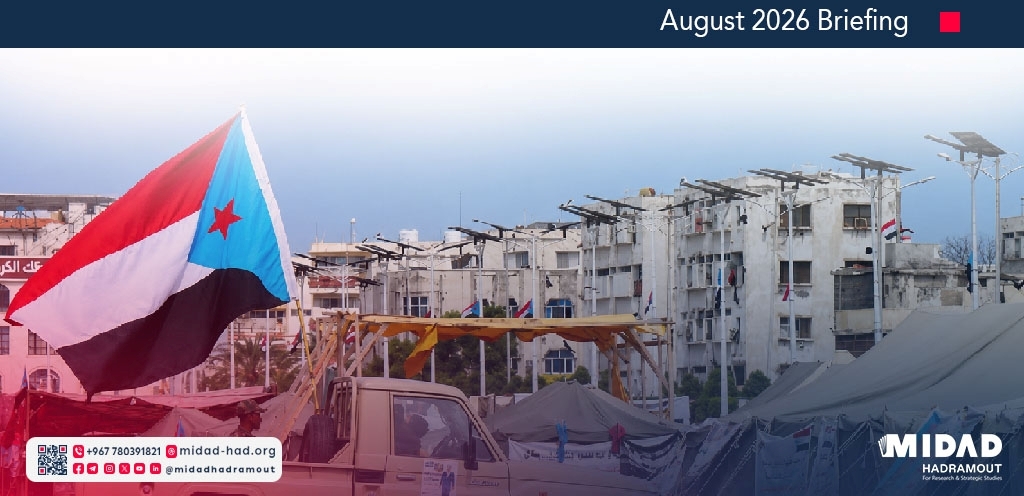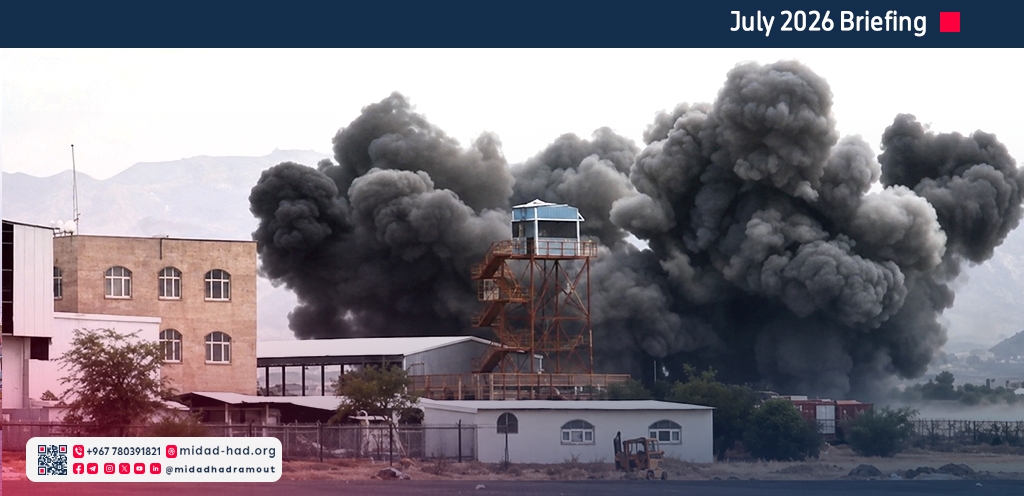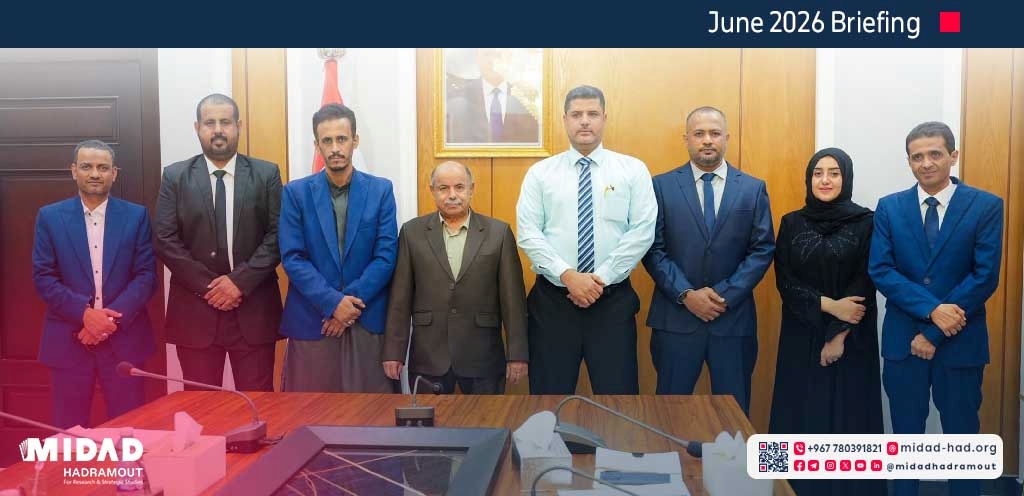

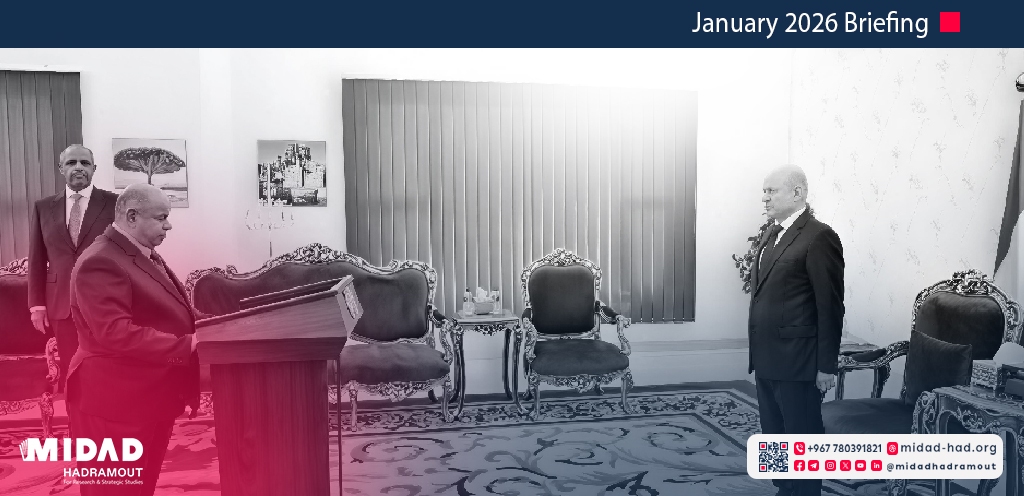
January was a month of political earthquake, starting in Hadhramout, continuing through all regions of the east, and reaching Aden. After Southern Transitional Council (STC) took power and completed its control over Hadhramout and Al-Mahra in early December last year, and with many people expecting the announcement of separation, this happened at the same time as STC announced a two-year transition period leading up to a vote on independence. However, things changed very quickly this month. The dream of separation has now vanished into thin air. Moreover, Presidential Leadership Council has received significant international and regional support in its battle against the separatist demands of STC. The countries sponsoring the peace process and the UN international envoy stood against the actions of STC, confirming their support for the integrity and unity of Yemen. Events have proven that STC has failed in its military and political campaign. Its forces had been defeated with surprising speed by the regular forces (National Shield, Tribal Confederacy, and Emergency Forces), as well as the fact that the declaration of a transitional phase was a misguided decision that increased the intensity of the escalation, especially since the STC was losing its military positions during that period.
These political changes regarding the southern issue motivated Rashad Al-Alimi, head of the Presidential Leadership Council, to request that Saudi Arabia sponsor a new dialogue conference to reach a fair solution to the southern issue. The importance of this step is that it pulls the rug out from under the STC, which has monopolized representation of the southern issue over the past ten years. This may also allow for the emergence of more political forces in the south and greater openness to more perspectives on the southern issue.
Politically, this is a major loss for the Council and for the future of partition. After the STC had tried to impose what it called “the restoration of the southern state” as the only solution to the southern issue, the issue was transformed, with the arrangements prior to the upcoming Riyadh Dialogue Conference, into a fair political issue capable of reaching other solutions. STC initially expressed enthusiasm for engaging and participating in the conference, as did most of the local authorities in the south and east, which were under the control of the Transitional Council.
The political earthquake did not stop at the fall of STC and its withdrawal from the eastern regions. The situation escalated to the point where STC was dissolved by the delegation it had sent to Riyadh. This was also accompanied by Aydarus Al-Zubaidi’s refusal to go to Saudi Arabia, despite the kingdom’s invitation for him to attend. Aydarus has disappeared from public view. While the coalition said that he fled to Somalia and then to UAE, the STC insists that Aydarus is still in the south.
Under these circumstances of sharp polarization, some departments of the STC in Aden announced their rejection of the decision to dissolve the Council, which was taken by a number of Council leaders in Saudi Arabia. Consequently, the STC split into two opposing sides. The first side decided to make peace with Saudi Arabia and move forward with the South-South dialogue. It is represented mainly by Abu Zarah Al-Mahrami and Abdulrahman Sheikh, the new governor of Aden. The other side continues to refuse to go to Saudi Arabia, holding it responsible for everything that has happened to the council militarily and politically. This side is led mainly by Aidrous Al-Zubaidi and Hani Bin Breik.
So the STC split into two opposing sides, which even got into fights on social media. The hardliners said going to Riyadh was a betrayal, while the other side said being against Saudi Arabia would hurt the southern cause. This happened at the same time as more political and military leaders linked to STC kept coming to Saudi Arabia, which seemed like Saudi Arabia wanted to calm things down between the STC and Saudi Arabia, and maybe even try to get these people on Saudi Arabia’s side.
The political changes did not only affect the STC, but also reached various leadership levels. Aidrous Al-Zubaidi and Faraj Al-Bahsani lost their membership in the Presidential Leadership Council and have been replaced by Salem Al-Khanbashi, governor of Hadhramout Governorate, and Major General; Mahmoud Al-Subaie. On the other hand, Tariq Saleh and Abu Zarah Al-Mahrami kept their positions after visiting Saudi Arabia and giving up their previous stance in support of STC’s moves to attack the eastern governorates. The changes also included several prominent officials, such as Defense Minister Al-Daari, the head of the Second Military Region, and the governor of Aden, as well as several other military leaders who were loyal to STC. The changes also included the resignation of the Bin Breik government and the appointing of Shai’a Al-Zindani as prime minister, amid anticipation of the announcement of the full formation of the cabinet.
Within a month, STC shifted from being the dominant political force in the south, controlling almost all southern regions after taking control of Hadhramout and Al-Mahra, to a dissolved political entity, with its leader wanted on charges of treason and its whereabouts unknown to this day. It lost most of its military power, and its leaders split into two different groups. All the military and political leaders who were on its side when it attacked the eastern regions are being replaced. Although STC still maintains a popular base, security forces in Aden, and weapons smuggled into Al-Dhale, it has returned to a period of demonstrations, as a political entity with no power. and can do little more than demonstrate for the right to separation or the restoration of the state, as STC describes it. After the dissolution of STC, it gathered its supporters in demonstrations rejecting the dissolution decision and affirming their support for Council leader Aidrous Al-Zubaidi.
In the rest of the liberated areas, on the ground, it began as if STC is just a page, or a period of time that must be closed. Saudi Arabia took action, led by Major General Falah Al-Shahrani, especially in Aden city, not only to restructure the armed forces in Aden, but also to improve services, particularly electricity, and to announce various development projects. This improvement in services was also experienced in various governorates, such as Hadhramout, Lahj, and others. This is also accompanied by the release of civil and military salaries, with promises of regular salary payments in the coming months.
In addition to service improvements, Hadhramout has seen significant political developments, most importantly the extensive meetings held by Governor Salim Al-Khanbashi with various political and tribal forces in preparation for participation in Riyadh Dialogue Conference. Other Hadhrami political forces also gained influence, led by Hadhramout National Council, whose headquarters were officially opened by the governor himself upon his arrival in Hadhramout after pushing back the forces of STC.
Despite the general optimism, the tribal confederacy linked its participation to the marginalization and exclusion suffered by Hadhramout before any consultations or future dialogues, and to its fair involvement in a manner suited to its status and real significance. This may be evidence of a difference in political views among the political forces in Hadhramout, as the tribal confederacy clearly affirms that Hadhramout should not be considered part of the south, but rather has a just cause equivalent to that of the south. It is worth noting that voices calling for Hadhrami rights and justice for the Hadhrami cause have grown significantly louder in recent times, especially since Governor Al-Khanbashi raised a flag representing Hadhramout next to the republican flag after his return from Saudi Arabia, clearly displaying it at official meetings. This may indicate direct or indirect Saudi support for these demands. The tribal confederacy also announced the completion of the national team’s work on preparing comprehensive self-rule documents, which is an important first step toward achieving the confederacy’s demands for self-rule.
Self-rule may not seem close to realization due to the nature of the international system of state separation and local and regional political circumstances. However, with recent victories in Hadhramout, the removal of the transitional forces, and growing Saudi support for these demands, Hadhramout may achieve further political and economic gains when the new and final form of Yemen is agreed upon.
Top News:
January 1:
- Southern political groups reject Al-Zubaidi’s announcement and call for a comprehensive conference to discuss the southern issue.
- January 2:
- Ambassador Al Jaber: Al-Zubaidi undermines the path to calm in Yemen with his military and political moves.
January 3:
- Consultative meeting of Shabwah sheikhs and leaders condemns the transitional government’s invasion of the eastern governorates.
January 4:
- The governor of Hadhramout arrives in Seiyun after the transitional militia is driven out of the governorate.
- The local authority in Lahj Governorate welcomes Saudi Arabia’s call for a conference on the southern issue.
- The Sultanate of Oman welcomes the call for dialogue, which will be hosted by Saudi Arabia.
- Al-Alaimi: The government is continuing to reorganize the forces under the supervision of the Ministries of Defense and Interior.
January 5:
- Saudi Minister of Defense meets with Abdulrahman al-Mahrami.
- Transitional Council delegation leaves Aden for Riyadh.
- Presidential Council replaces Aden Governor Lamlas, refers him for investigation, and appoints Abdulrahman Sheikh Abdulrahman al-Yafei as his replacement.
January 7:
- The Presidential Council revokes Eidros’ membership and discharges the ministers of transportation and planning.
- The governor of Hadhramout announces a series of resolutions, including the appointment of a new director general for the governor’s office and the dismissal of military and security leaders in the Second Military Region and Hadhramout Coast Security, referring them to military trial. The changes also included the appointment of a new commander for the Second Military Region, a new director of Hadhramout Coast Security, as well as a new chief of staff for the Second Military Region.
January 8:
- The governor of Hadhramout governorate issued a package of new administrative resolutions that included a number of vital facilities and districts, within the framework of organizing administrative work and enhancing performance efficiency. The resolutions included the appointment of a new director general for the General Administration of Information and Public Relations in the governorate, a new director general for Mukalla City, a new head of the television sector at Hadhramout Satellite Channel, and a new director general for Gail Bin Yamin District.
January 9:
- The Consultation and Reconciliation Authority welcomes the dissolution of the Transitional Council and confirms the national partnership.
January 10:
- The Presidential Council accuses the UAE of preventing Al-Bahsani from leaving its territory.
- Al-Alimi announces the formation of a military committee to unify military formations under the leadership of the coalition.
January 11:
- Consultative meeting of the people of Shabwah in preparation for Riyadh Dialogue Conference.
- Al-Khanbashi calls for preliminary Hadhrami dialogue before Riyadh Dialogue Conference.
January 15:
- During his meeting with the Presidential Leadership Council, the Saudi Minister of Defense announces economic support and development projects for Yemen.
- The Attorney General opens a case of treason against Aidrous Al-Zubaidi for damaging the military, political, and economic center of the country.
January 16:
- The United States imposes new sanctions on Houthis.
January 17:
- The Presidency mourns Ali Salem Al-Beidh, declares mourning, and orders flags to be lowered.
January 18:
- Al-Shahrani: A local security agency will secure Aden with specific Saudi support.
January 19:
- The UAE denies claims by the governor of Hadhramout about “secret prisons” at Al-Rayyan Airport.
January 21:
- A UN official arrives in Mukalla and meets with Al-Khanbashi and the leadership of the Second Military Region.
January 22:
- Al-Khanbashi establishes a committee to represent Hadhramout’s political vision at “Riyadh Conference.”
January 23:
- Houthi group announces that prisoner exchange deal cannot be implemented, while government delegation affirms its continuation.
January 27:
- Hadhramout Tribal Confederacy announces its refusal to participate in any political arrangements based on the principle of equality between the north and the south.
- Inclusive Hadhramout Conference demands that Hadhramout be considered an independent partner in any settlement.
January 28:
- The Security Council decides to extend the UN mission in Hodeidah for two months only, for the last time.
Despite all the political and military changes that have taken place in all areas under the legitimate government, especially in the eastern governorates, the economic situation has seen the most improvement. In addition, Al-Rayyan and Seiyun airports have resumed operations after a period of closure, especially Al-Rayyan Airport. Furthermore, flights from Socotra and Al-Mukha airports to Saudi Arabia have also begun, which is an important step forward and makes life easier for citizens. However, the most important thing was the payment of salaries to the military and security sectors, and the Prime Minister also directed the quick payment of delayed salaries to the civil sector. This is the most important development, which will have a direct impact on the daily lives of citizens.
Regarding services, various parts of the country, including Hadhramout, have seen a clear improvement in electricity supply. This improvement is mainly due to Saudi support, particularly the supply of diesel and fuel oil (Mazout). However, this improvement may be due to better weather conditions during the winter. Therefore, the most significant challenge will be during the summer.
In particular, Saudi Arabia has not yet announced any support in the form of new generators to reduce electricity loads in any of the liberated areas. It is also worth noting that there is a certain degree of concern about protecting diesel and fuel oil shipments from any disruptions that may occur, which could hinder their timely arrival.
Meanwhile, Socotra has experienced a different situation from other governorates, as it was almost entirely dependent on Emirati aid. The UAE’s departure has therefore caused significant damage to most aspects of citizens’ daily lives, including medical services, oil derivatives, and electricity.
The current situation may be better than before for areas under legitimate control from an economic side. However, the most significant challenge will be maintaining these conditions, particularly salaries and electricity services. only time will answer this question.
Regarding UN aid, the situation is getting worse at an alarming rate because international organizations have stopped working due to the Houthis’ ongoing arrests of their employees on charges of spying for Western countries. This puts more citizens, especially in areas controlled by the Houthis, at risk of worsening hunger. The lack of funding is another problem that the UN has been unable to solve.
Top News:
January 1:
- STC government responds to restrictions on flights to UAE by closing Aden airport.
January 4:
- United Nations warns that the humanitarian response in Yemen is approaching a “breaking point” due to a funding gap.
January 8:
- Socotra faces fears of “complete paralysis” after UAE companies begin withdrawing from vital services.
- Human Rights Watch warns: Houthi arrests of UN staff push humanitarian aid in Yemen to the edge of collapse.
January 11:
- Prime Minister: We reject the continued illegal collection of taxes and security checkpoints.
January 15:
- With Kuwaiti support, an agreement is signed to build and equip Bowaish Hospital in Mukalla.
- The Saudi Reconstruction Program launches 28 development projects in ten Yemeni governorates at a cost of 1.9 billion.
January 16:
- The Central Bank of Yemen denies printing or issuing any new currency.
January 20:
- An investigative report reveals the involvement of an Emirati company in the depletion and grinding of sardines.
- The local authority in Al-Mahra and the Omani Authority discuss the mechanism for disbursing the Sultanate’s grant to teachers.
January 21:
- Al-Alaimi announces the launch of a “promising phase of development projects” in Al-Mahra and Shabwah.
- With Saudi support, an agreement is signed to operate more than 70 power stations in Yemen.
January 28:
- World Food Programme suspends operations in Houthi-controlled areas and terminates the contracts of 360 employees.
Recent political and military events in the eastern governorates and liberated areas have also had social consequences. The first of these was STC forces’ prevention of Taiz residents from entering Aden. This violation of citizens’ fundamental right to freedom of movement caused widespread condemnation and outrage, not only from human rights organizations but also from the legitimate political authorities.
The main reason for this may be STC security forces’ fears of fighting inside Aden (since the decision was made while the National Shield Forces were still in Hadhramout). STC still has security concerns tinged with a kind of racism, believing that travelers from the northern regions may form sleeper groups for their opponents. STC has previously carried out several racist campaigns against citizens from the northern regions in Aden city. This campaign may be a form of retaliation for the military losses suffered by the STC forces.
The other issue was the presence of nearly 600 tourists stuck in Socotra after flights were suspended due to military events. It is worth noting that flights to the island were redirected to Jeddah, Saudi Arabia, instead of UAE. It is unclear what the future holds for the island and its services after the UAE’s withdrawal, but it is certain that Socotra could play a greater role in tourism if it were to be managed effectively.
The events also reflected a continuing situation of displacement from Hadhramout to Marib. This displacement began with STC’s entry into the eastern governorates in December, before continuing in January due to the return of military operations in the governorate. In Hadhramout, educators complained about salary deductions, leading the governor to investigate the matter.
On the legal side, human rights teams have been working hard to get access to prisons run by UAE in liberated areas, especially in Hadhramout and Socotra. Through tireless work interviewing victims and recording their statements, these human rights efforts could develop in the future into a legal case against UAE or those involved in these prisons, such as leaders of STC.
Meanwhile, the health situation remains extremely difficult, with measles and cholera continuing to spread and killing large numbers of citizens in areas controlled by the legitimate government. Even higher numbers are expected in areas controlled by the Houthi group due to the limited number of vaccinations, without any official announcement by the group.
Top News:
January 5:
- Measles kills children… 106 deaths and more than 16,000 cases recorded in one year.
- United Nations: 1,228 Yemeni families internally displaced to Marib due to escalating violence in Hadhramout.
- Despite being sentenced to release, journalist Al-Mayahi remains in Houthi prisons.
January 9:
- In just 22 months, cholera has killed 1,100 Yemenis and infected more than 339,000.
- Two agreements are signed to operate artificial limbs centers in Aden and Marib to serve 14,000 beneficiaries.
January 10:
- Socotra: Citizens complain about a fuel crisis and long lines.
January 11:
- Houthi group releases writer and satirist; Oras Al-Iryani after months of detention.
January 15:
- Launch of the urgent response to combat cholera in Hadhramout.
January 19:
- New death sentences for eight Houthis accused of “spying.”
- 100 victims report violations of detention and enforced disappearances in Hadramaut.
January 20:
- The National Commission of Inquiry conducts a field inspection of secret UAE prisons on Coastal Hadhramout.
- Discovery of secret detention centers and serious violations inside the port of Al-Dhaba.
January 24:
- Students at Socotra Archipelago University express anger over the suspension of study and withdrawal of Emirati support.
January 26:
- Aden: The investigation committee hears testimony from victims of arbitrary detention and enforced disappearance.
January 27:
- STC forces detain the National Commission team in Socotra and prevent it from documenting illegal prison.
January 29:
- Human rights report documents more than 6,000 cases of detention in Yemen in 2025.
January 31:
- Including nature reserves… National Commission of Inquiry continues to document UAE violations in Socotra.
In January, Hadhramout witnessed one of the most important military events in its contemporary history. Although these military events were an extension of what happened last December, as they came in response to the Transitional Council’s control of the eastern governorates (Hadhramout and Al-Mahra). However, the most significant feature of these military events was Hadhramout and Al-Mahra’s unexpectedly fast return to constitutional legitimacy.
Despite all attempts by the Presidential Council and the Saudi political and military leadership to call on the Transitional Council to withdraw from the eastern governorates, which it had taken control of by force of arms, the Transitional Council ignored all these calls. This led to the launch of a large-scale military operation called “Taking Over the Military Camps,” led by the governor of Hadhramout and the commander of the National Shield, Salem Al-Khanbashi, with Saudi support.
On January 2, this military operation was launched, primarily aimed at removing the separatist Transitional Council forces from Hadhramout and Mahra governorates. Despite the significant military strength of the Transitional Council, it failed to withstand the pressure of the Yemeni emergency forces, particularly the National Shield, with military support from coalition forces. The main reason for this military failure of STC was an unforgivable strategic military mistake: STC gathered all its forces in Al-Khashah, specifically in the 37th Armored Brigade Camp. However, the geographical nature of this camp was not in the transitional council’s advantage, because it was located in an exposed desert area. This made targeting STC forces a very easy task. Perhaps one of the things that affected the transitional government’s ability to fight was the UAE’s military withdrawal from Yemen, which left it without an ally on the ground or any future support, unlike the legitimate forces, which were backed by Saudi Arabia with all its military and political weight.
This rapid defeat of STC forces came as a shock to both its supporters and its enemies. Based on the military strength of STC, it could have resisted longer or had more effective military plans. This also happened at the same time as a lot of camps got robbed after the weapons and ammo stores were opened up to people to cause chaos, and the same thing happened to civilian facilities. This was because STC forces pulled out of their positions and deliberately opened up the weapons stores to people to cause chaos. In the context of the defeat of the STC forces, the significant role played by the Arab coalition air force cannot be ignored. The intensive air strikes played a key role in defeating the STC forces. The full extent of the STC forces’ losses remains unclear to this day.
This loss for STC forces led to a reduction in the escalation in the remaining areas that were affiliated with STC, where the governors of Al-Mahra and Shabwah agreed to allow National Shield Forces to enter without a fight. The STC forces in Al-Mahra surrendered their weapons and left safely for their hometowns with only their personal weapons. However, the disappearance of Aidrous Al-Zubaidi marked a new chapter of escalation, timed with the coalition’s bombing of some military camps in Al-Dhale, which were suspected of being used to smuggle weapons.
Despite the quick victory, which took no more than two days for the legitimate forces on the ground, the normalization process may take longer, especially in light of the large quantity of looted weapons in the area. This led the governor of Hadhramout to give a 72-hour deadline for anyone who looted weapons to turn them in. This could pose a serious security challenge not only in the short term, but also in the medium and long term. In the same context, the coalition has accused STC forces of smuggling weapons from Aden to Al-Dhale and other areas. This could pose a threat to the country and security forces in the future, and could become a source of terrorist forces in the future.
Another challenge facing the legitimate government will be restructuring the forces in the liberated areas, especially in Aden, where the largest military force belonging to the STC is located. This will be a major challenge for the legitimate forces, especially after years of conflict and fragmentation among the military forces with their various names, titles, and objectives. Furthermore, STC, especially its hardline faction led by Al-Zubaidi, may not easily respond to the plan to restructure the forces, considering it a break-up of its solid bloc.
As for the coalition forces, they have demonstrated good military capabilities and played a major role in countering the attacks of the transitional forces. However, the next step must be to reintegrate these forces into the official legitimate forces, while investing in their capabilities and potential. These forces also played a role in securing many areas of coastal Hadhramout. Therefore, despite the cautious optimism in the liberated areas, the challenges ahead will be no less difficult.
Perhaps one of the first challenges faced by the security forces, especially in Aden, was dealing with the demonstrations called for by STC. Despite the declaration of a state of emergency and the refusal of the local authorities in Aden to allow any gatherings or demonstrations, Aidrous Al-Zubaidi called on his supporters to hold mass demonstrations to show their support for him. The security forces in Aden then returned to close the headquarters of STC’s General Assembly. Aden remains in a state of instability before the implementation of the legitimate government and the coalition’s plan to restructure these forces.
The most significant security-related event was the failed assassination attempt targeting Hamdi Shukri, commander of the Second Brigade of the Giants Forces. As for the clashes against the Houthis, Taiz Front has witnessed a military escalation and increasing clashes, resulting in casualties on both sides. However, it does not appear that there will be a return to the pattern of fighting that preceded the truce and calm. Several different areas in Al-Mahra and Marib were also subjected to US bombing to assassinate leaders of Al-Qaeda.
Top News:
January 1:
- The Giants Forces pull out of the west coast and redeploy in Hadhramout.
January 2:
- Coalition spokesperson: Saudi naval forces deployed in the Arabian Sea.
- Air strike targets Seiyun International Airport in Hadhramout.
- UAE says it has completed withdrawal of all its forces from Yemen.
January 3:
- Members of “STC” attack and surround the headquarters of Saudi forces in Socotra.
January 4:
- The coalition targets Al-Ghaydah center with a warning strike after the STC forces refuse to withdraw.
January 5:
- Clashes break out between the National Shield Forces and the Transitional Militia in Al-Mahra.
January 7:
- The first batch of National Shield Forces arrives in Aden.
January 8:
- The National Shield Forces seize anti-aircraft ammunition in a security operation in Al-Mahra.
- Hadhramout: Armor and military vehicles hidden by STC in Al-Shahr are found.
January 9:
- Lahj: Armed men attack military crews in Halmin and loot weapons shipments.
January 13:
- Military meeting attended by representatives from Saudi Arabia to arrange for the unification of military factions in Aden.
January 19:
- Al-Khanbashi reveals the existence of prisons, secret detention centers, and explosives inside the Emirati forces’ headquarters at Al-Rayyan Airport in Hadhramout.
January 20:
- Yemeni Interpol takes custody of wanted security suspect Ghazwan Al-Makhlafi.
- Al-Khanbashi emphasizes that all security and military formations must be placed under a single command.
January 24:
- Emergency forces pull out of Hadhramout camps and hand them over to the National Shield.
- The army destroys Houthi equipment during attempts to set up new positions west of Taiz.
January 25:
- Yemeni official reveals the establishment of a joint operations authority between the ministries of defense and interior.
January 27:
- Hadhramout authorities announce casualties due to disturbances at the central prison in Mukalla.
January 28:
- The Yemeni army announces the killing of four Houthi members south-east of Taiz.
January 29:
- Security forces in Aden close the headquarters of the General Assembly of the dissolved Transitional Council.
- Deposit Protection Commander: Drug smuggling networks are linked to Houthi preventive security.
January 30:
- United Nations: Sana’a authorities transfer UN equipment and assets to an unknown location.
January 31:
- One hundred dead bodies of armed men from the STC arrive at Seiyun Hospital a month after they were killed in airstrikes.
- Initiating a large-scale campaign to prevent the carrying of weapons in Hadhramout Wadi and desert.
Your Content Goes Here