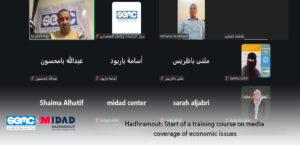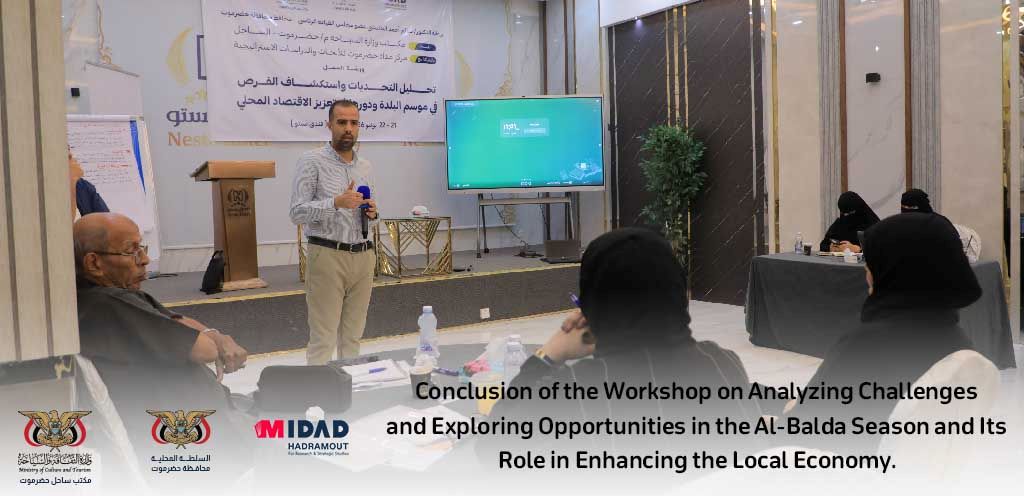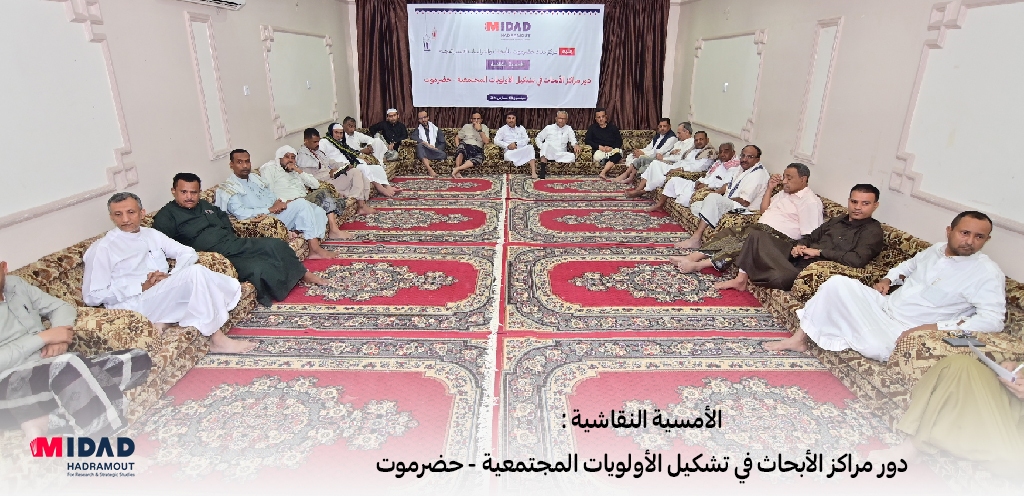


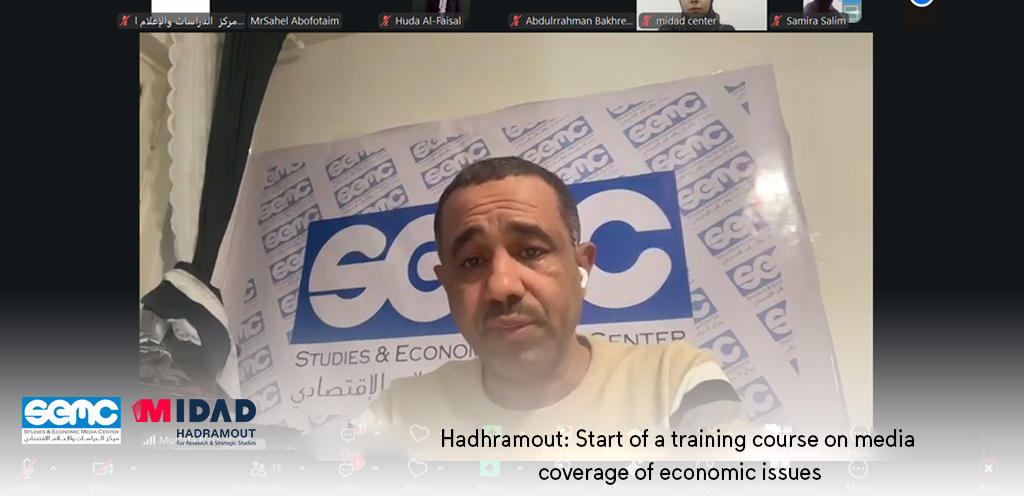
On Wednesday, January 14, 2026, MIDAD Hadhramout Center for Research & Strategic Studies and Economic Studies and Media Center have launched a specialized training workshop on empowering media professionals to understand and analyze local economic issues. The workshop is being held online via Zoom for two days, with the participation of a number of journalists and media professionals interested in economic affairs in Hadhramout Governorate, eastern Yemen.
This course aims to equip participants with the basic tools and mechanisms of economic journalism, with a focus on how to write news stories and economic reports in a highly professional manner and in a simplified style that takes into account the mindset of readers and audiences, and makes economic issues more relevant to people’s daily lives and concerns.
The training topics focus on enabling journalists to systematically analyze the local economic situation, understand and interpret economic indicators, and transform them into professional media content that helps raise public awareness and supports public discourse on livelihood and development issues in Hadhramout Governorate.
The introductory program for the course includes an explanation of the concept of economic journalism and its significance for society, and the direct relationship between the economy and citizens’ lives, as well as practical training on simplifying common economic terms—such as inflation, the national budget, exchange rates, and unemployment—and linking them to the local context so that the public can understand their effects and implications.
In this context, Abdulkhaliq Al-Hadar, Director of MIDAD Hadhramout Center for Research & Strategic Studies, has clarified that the signing of a partnership and cooperation agreement with Economic Studies & Media Center comes as part of efforts to strengthen joint work in the fields of research and media training, and to develop the capabilities of media professionals in covering economic and development issues. He has emphasized that this partnership represents an important step toward strengthening the media’s role in promoting transparency and accountability, and enabling journalists to produce professional economic content that contributes to building a knowledge-based public awareness.
Meanwhile, the head of Economic Studies & Media Center and workshop trainer; Mustafa Nasr, has mentioned that the course is part of efforts to develop journalists’ capabilities and equip them with the tools to draft professional economic reports that can interpret figures and discuss economic policies in language that reflects the practical realities of citizens’ lives. He emphasized that economic issues are a priority in journalism due to their direct impact on people’s lives.
In turn, Huda Faisal, a researcher and political analyst who participated in the course, described the training as valuable and useful, saying that it provides journalists and those interested in media work with the tools of economic journalism and helps them produce clear, professional, and easy-to-understand content that meets the needs of the audience.
Hadhramout: Start of a training course on media coverage of economic issues