

During June 2025, the Yemeni political scene witnessed important developments centered on escalating demands for self-rule in Hadhramout Governorate and deepening divisions within central government institutions, against a backdrop of severe economic and service deterioration.
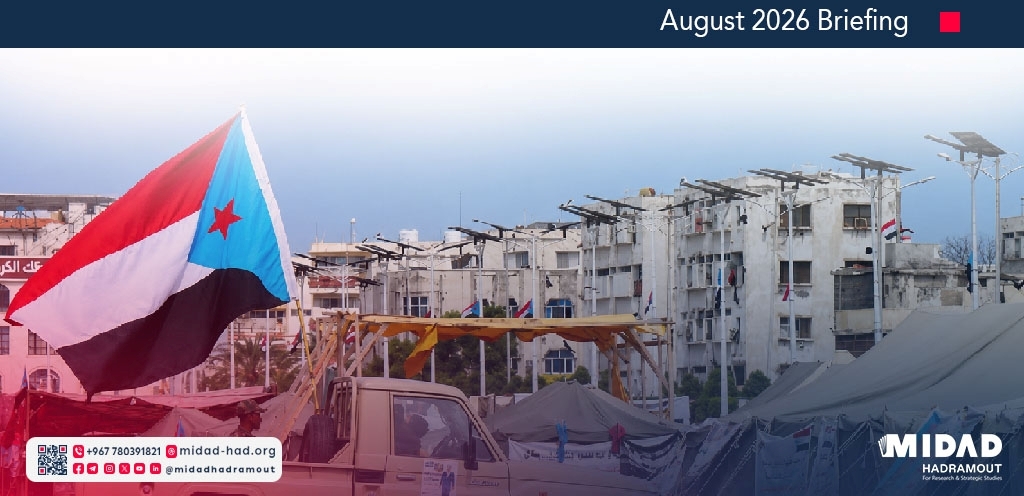
In Hadhramout, the oil-rich governorate witnessed rapid political movement toward self-rule. On June 1, Hadhramout Inclusive Conference organized a large meeting in Seiyun to support calls for self-rule, attended by a wide range of social figures, political groups, and civil society organizations. This trend got stronger when Hadhramaut Tribal Alliance announced on June 23 a document of political principles for self-rule, which included a comprehensive vision for an independent self-rule system with full powers in governance and administration, while keeping sovereignty over land, resources, and citizens.This orientation was crowned by the alliance’s announcement on June 29 of the formation of the first brigade of the Hadhramaut Protection Forces under the command of Brigadier General Al-Jawid Barashid, indicating a shift from political demands to military organization. In the same context, the Hadhramaut Conference called on the political leadership to halt the economic and service deterioration, warning of a coming explosion if the suffering of the oil-rich province continues to be ignored.
At the national level, divisions within government institutions have deepened. On June 23, Member of Parliament Ali Ashwal accused the Presidential Leadership Council of abuse of power and violating the legislative and oversight powers of the Parliament, criticizing the Speaker of Parliament for delegating the power to amend laws to the Chief Justice.The crisis got worse when the National Resistance, led by Tariq Saleh, complained on June 26 about being excluded and ignored in decisions and appointments, demanding real participation in decision-making and not just selective invitations to political groups. On June 28, presidential adviser Marwan Damaj responded with a call to discuss the issues within official frameworks, preparing open statements expressing weakness or rebellion. Before Presidential Council President Rashad al-Alimi acknowledged on June 30 that there were differences and disagreements among council members, he emphasized that the council was united around a common goal against the Houthis.
On the humanitarian issue, on June 1, the Yemeni government held the Houthi group responsible for the stalling of the prisoner and detainee issue, pointing to their rejection of the “all for all” principle and their exploitation of the issue as a bargaining chip, while thousands of abductees suffer in the group’s prisons. The Yemeni embassy in Beirut also denied any official connection with the Yemeni citizen arrested in Lebanon on charges of communicating with Mossad, confirming that it did not hold any diplomatic or governmental status.
In an attempt to face the accumulated challenges, Prime Minister Salem bin Breik headed the first Council of Ministers meeting in Aden on June 3 after a long pause, emphasizing the priority of basic services such as electricity and water, and developing plans to address living conditions within 100 days, stressing that the government will be in permanent session to follow up on economic, service, and health issues.
These developments indicate a deepening of the political crisis in Yemen on multiple levels, from growing demands for self-rule in Hadramaut to institutional disputes at the center, which portends greater challenges in light of deteriorating economic conditions and the absence of radical solutions to the service and livelihood problems faced by citizens.
News Briefs:
Sunday, June 1:
The executive committee of the Hadhramaut Conference in Seiyun organized an expanded meeting with the participation of social, political, and civil figures to support the self-government project. The vision of local administration and the role of the media in promoting it were discussed, with an emphasis on building independent institutions that enable the people of the governorate to manage their own affairs.
The Yemeni government blamed the Houthi group for the suspension of prisoner exchange negotiations due to its rejection of the “all for all” principle and its refusal to disclose the fate of those who have been forced to disappear, amid reports that more than 350 prisoners have been killed under torture.
Monday, June 2:
The Fuel Committee of Hadhramaut Tribal Alliance accused the local authority of failing to accelerate procedures for supplying fuel to power stations. The alliance explained that the Electricity Corporation had submitted an official request to secure diesel in February, but the local authority had not completed the necessary steps to direct Wadi Hadhramaut Oil Company to submit the request to Petromasila.
Tuesday, June 3:
Salem bin Breik headed the first session of the Council of Ministers and assigned ministries to develop urgent plans for living and service priorities within 100 days, focusing on exchange rate stability, salary payments, electricity and water support, and fighting corruption, emphasizing the importance of working as a team to achieve measurable results.
Thursday, June 5:
US President Donald Trump signed an executive order prohibiting citizens of twelve countries, including Yemen, from entering the US, and imposing partial restrictions on seven other countries.
Friday, June 6:
The head of the Houthi prisoners’ committee, Abdul Qadir al-Murtada, announced the group’s readiness to implement a comprehensive exchange deal that includes all detainees without preconditions, and urged Saudi Arabia to apply pressure to accept the initiative.
Sunday, June 8:
Eng. Abdullah Bin Talib has revealed a corruption cell within the authority and the alliance that manipulates the quantities of diesel fuel for services, and announced that strict corrective measures would be taken even though they would have a temporary impact on supplies.
Tuesday, June 10:
The head of the alliance; Sheikh Amr Bin Habrish, issued a decree to dissolve the supervisory committee after it completed its tasks in managing the supply of oil products to service facilities, particularly electricity. Over the past few months, the committee monitored fuel quantities to ensure the continuity of power supply in Hadhramout.
Thursday, June 12:
The Yemeni embassy in Lebanon denied any official relationship with the Yemeni detainee accused of spying, confirming that he did not hold any diplomatic or government position. It added that communication with him was based on undocumented evidence and that the procedures were carried out in full coordination with the Lebanese authorities without exceeding the legal framework.
Wednesday, June 18:
Foreign Minister; Shai’a Al-Zindani met in Aden with the UN Resident Coordinator in Yemen, Julian Harness, to discuss the 2025–2026 Humanitarian Response Plan, focusing on improving coordination among relief agencies, ensuring efficient delivery of aid, and protecting UN teams in the field.
Friday, June 20:
The Houthi group announced the opening of the “Aqabat Al-Quntha’a” road between Shabwah and al-Bayda after it had been closed since 2021, in response to local mediation efforts. The group confirmed its readiness to clear the road of war remnants.
Saturday, June 21:
Saudi Foreign Minister Prince Faisal Bin Farhan has affirmed that the Kingdom will continue to support efforts to reach a political solution in Yemen. The minister noted Riyadh’s keenness to strengthen communication with the Yemeni parties and facilitate consultations to reach a comprehensive agreement that satisfies all parties.
Sunday, June 22:
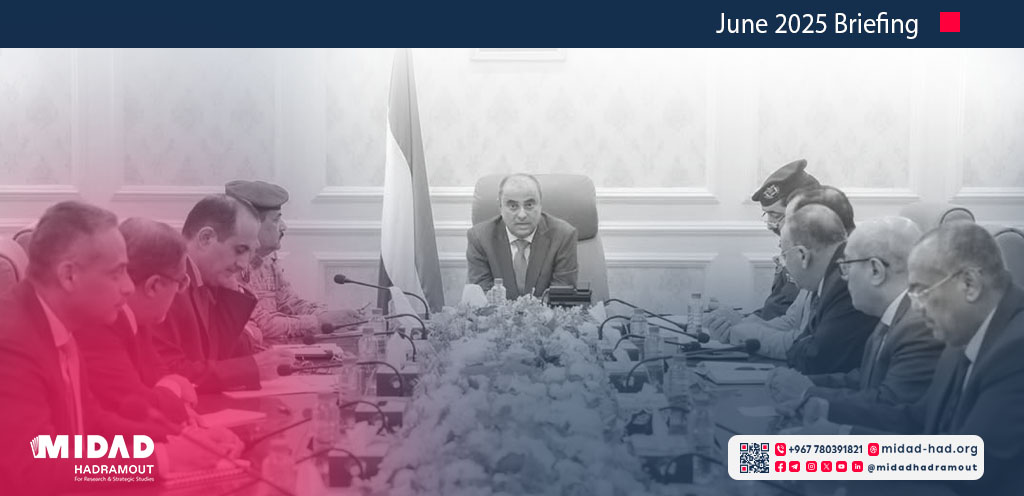
The Chairman of the Leadership Council, Rashad Al-Alimi, held a meeting in Aden with the Chairman of the Consultation and Reconciliation Authority, the Deputy Secretaries-General, and the Secretaries of the parties to discuss financial and administrative reform, the payment of salaries to employees, and ensuring the flow of basic commodities, while emphasizing the fight against corruption and strengthening the national partnership to ensure the success of the government’s 100-day plan.
Monday – June 23:
Hadhramout Tribal Alliance has issued a document setting out the political principles of self-government, which establishes the governorate’s sovereignty over its resources and its self-administration by the will of its people. The document defines a parliamentary system of government, local legislative and judicial powers, and the preservation of civil and economic rights, calling for a comprehensive Hadhramout agreement based on the principles of justice and transparency.
Member of Parliament Ali Ashwal accused the Presidential Leadership Council of exceeding the legislative and supervisory powers of Parliament, referring to a presidential decree to amend the Judicial Fees Law and meetings with political groups that assume a supervisory role. He called on the Parliament to exercise its constitutional powers to stop what he described as “excesses and deviations from the constitutional path.”
Tuesday, June 24:
The Houthis announced that they would not comply with the ceasefire agreement between Israel and Iran, confirming that they would continue their missile attacks on occupied territories until the aggression against Gaza ceased and the blockade was lifted.
Thursday, June 26:
Eng. Abdullah Bin Talib announced his rejection of local appointments related to the Hadhramaut Conference, claiming that some of its members were involved in oil product corruption. He emphasized that the Wadi’s tribes have not recognized the conference’s outcomes since 2017.
The Political Office of the National Resistance in Mokha issued a statement criticizing the selective meetings of the President of the Presidential Leadership Council and demanding a specific mechanism for discussion after no representative of the National Resistance in the western coast was invited to a meeting that brought together the Consultation and Reconciliation Committee, the Economic Team, and party secretaries with the President of the Council.
Saturday, June 28:
Marwan Damaj, advisor to the president and former minister of culture, has criticized the release of open statements dealing with national issues, describing them as “understood as an expression of weakness or rebellion.” This came in response to a statement by the National Resistance on the western coast.
Monday, June 30:
The head of the Presidential Leadership Council, Rashad al-Alimi, acknowledged that there are “differences” among council membership despite unity around a common goal and a single enemy.
In his meeting with the National Coalition of Parties, Rashad al-Alimi, head of the Presidential Leadership Council, emphasized that the regular meetings “are not a propaganda platform, but rather an objective necessity imposed by the requirements of partnership.” He stressed that the components of the council “are competing for the lead in the battle against terrorist militias” despite their differences.
The Ministry of Foreign Affairs and Emigrants announced the appointment of about 70 new diplomats and administrators to Yemeni missions abroad as part of a reform plan led by Minister Shai’a al-Zindani, which will increase the bill for salaries and compensation despite limited financial resources.
Hadhramaut governorate has witnessed a clear worsening of the electricity crisis due to a generation deficit of approximately 200 megawatts, as a result of 14,800 liters of oil products arriving daily at the Hadhramout coast stations, compared to an actual need of 1.2 million liters. This has forced Hadhramout Coast Electricity Corporation to mobilize continuous emergency teams to deal with power outages as temperatures rise and summer approaches.
At the national level, the World Bank’s Spring 2025 Economic Monitor report confirmed the continued downturn and fragility of the Yemeni economy, with per capita real gross domestic product falling by 58% since 2015. Inflation has risen to over 30% in areas controlled by the internationally recognized government, while the Y.R. has fallen from 1,540 to 2,065 riyals to the dollar in one year, before hitting a new record high of 2,735 riyals in June, due to declining oil exports, the Houthi blockade, and liquidity shortages.
The central bank made an effort to ease the turmoil with a series of auctions, announcing an auction to sell $50 million at a price of 2,659 riyals, with coverage reaching 41%, and announcing a new auction to sell $30 million in early July. In the light of the division of monetary institutions and dual exchange rates, state-owned oil companies approved successive price increases. Aden contained the increase in the price of a liter of “super” gasoline from 1,720 to 1,820 riyals and the previous increase in the price of a liter of regular gasoline from 1,360 to 1,420 riyals, which was reflected in the erosion of purchasing power and the exacerbation of the burden on citizens’ pensions.
News briefs:
Monday, June 2:
The World Bank report showed that Yemen’s real gross domestic product per capita has declined by 58% since 2015, with inflation above 30% and monetary and institutional fragmentation. The sea blockade and ongoing conflict have led to a decline in sovereign revenues and a rise in the cost of living.
The Ministries of Finance and Industry in Sana’a government have announced a complete ban on the import of goods whose local production covers the entire market, effective August 2025. The decision covers canned milk, juices, iron, pipes, and plastic products.
Monday, June 16:
The Yemeni Gas Company’s Brom gas facility has reopened after undergoing extensive maintenance, increasing its daily production capacity from 8,000 to 16,000 gas cylinders.
Prime Minister Salem Saleh bin Breik directed the completion of the power distribution project at the Khormaksar station and the addition of 20 megawatts powered by mazut, in a move aimed to improve the stability of the electricity grid in Aden and meet the increased demand during the summer.
Tuesday, June 17:
The World Bank announced a $30 million financing package, of which $20 million will be allocated to developing digital payment infrastructure, and financial inclusion in partnership with the United Nations Development Program, the Central Bank, and ten million dollars to UNICEF for the rehabilitation of schools and operational grants to promote girls’ access to education in disadvantaged areas.
Wednesday, June 18:
The head of government launched a 100-day plan to deal with the economic downturn and the monetary crisis. It included paying salaries, supporting basic services, reforming fiscal and monetary policies, and increasing transparency to boost revenues, rationalize spending, and resume oil exports to strengthen monetary and sovereign reserves.
Saturday, June 21:
The exchange rate of the Yemeni riyal has fallen to 2,735 riyals to the dollar in Aden and Hadhramout, reaching its lowest level ever due to falling revenues and the interruption of oil exports since 2022, with expectations of further monetary pressure if the liquidity crisis continues.
The Socotra National Conference condemned the increase in the price of 20 liters of petrol and diesel to 50,000 riyals, large gas cylinders to 63,000 riyals, and small cylinders to 532,000 riyals, describing the decision as exploitative and demanding the enforcement of official pricing and the prevention of monopolies.
The United Nations announced a reduction in its aid plan for Yemen to $2.5 billion to serve 10.5 million beneficiaries, of which it has received only $10.5 million so far, compared to more than $4 billion in 2019.
Sunday, June 22:
The general manager of Hadhramaut Coast Electricity revealed that there is a power shortage of 200 megawatts and that fuel deliveries amount to 814,000 liters per day out of a total requirement of 1,200,000 liters, worsening power cuts and putting pressure on government power stations.
Monday, June 23:
The newspaper Al-Arabi Al-Jadid has reported on the growth of networks smuggling Yemeni domestic gas through unstable waterways. These networks use multiple maritime routes to smuggle gas across the Red Sea and the Gulf of Aden to Somalia and Djibouti, and then on to markets in other countries.
Tuesday, June 24:
The Supreme Energy Council approved urgent solutions to provide the necessary fuel for power stations in Aden to increase generation capacity. Prime Minister Bin Breik also directed that issues related to the availability of domestic gas be addressed and that repeat shortages be prevented.
The Ministry of Transport in Aden discussed with private airlines (Fly Aden, Hadramout, and Belqis) the fulfillment of Civil Aviation Authority requirements for the quick operation of their flights, aimed at reducing pressure on the national carrier.
Thursday, June 26:
The Yemeni Oil Company in Coastal Hadhramout has approved a new increase in the price of a liter of “super” gasoline from 1,720 to 1,820 riyals, bringing the price of 20 liters to 36,400 riyals. The increase comes less than a week after an unannounced increase in the price of regular gasoline.
The Council of Ministers approved a draft public debt strategy to address economic crises and secure financing for the budget. The plan aims to mobilize financial resources through internal and external sources. The Council assigned the Ministries of Finance and Planning and the Central Bank with implementing the strategy.
Sunday, June 29:
The Central Bank in Aden announced the results of auction No. (14-2025) for the sale of $50 million at a price of 2,659 riyals. The coverage ratio reached 41% with total bids exceeding $20 million, while the highest bid price was 2,742 riyals.
Monday, June 30:
The Central Bank of Yemen in Aden announced the organization of auction No. (15-2025) to sell thirty million dollars on July 8, 2025.
The Ministry of Water and Environment has received $17 million in funding from the Green Climate Fund to implement a World Bank project to strengthen climate and water information systems in Yemen. The project aims to improve water resource management, enable communities to adapt, and increase agricultural production.
This month, Hadhramout governorate witnessed an increase in violations of press freedom after the security administration issued a circular ordering the arrest of journalists Abduljabbar Bajbir, Sabri bin Makhashin, and Mazahim Bajabir based on compulsory orders issued by the district attorney. Marib governorate was part of a list of eight governorates that witnessed 21 violations of media freedoms in May, which made it unique as the month with the highest number of violations recorded since the beginning of this year. These violations included arbitrary arrests, threats, interrogations, and trials for publishing, confirming the expansion of repression to include liberated areas.
At the national level, the National Commission for the Investigation of Torture Allegations documented legal hearings with victims who were subjected to electric shocks, beatings, and single-cell isolation in multiple detention facilities, calling for urgent action to hold perpetrators accountable and enforce legal and international standards for the protection of prisoners. It called on the United Nations to open an investigation into 583 serious violations against 504 children last year, amid a rise in attacks by militants on schools and hospitals and the starvation of children, at the worst level in three decades. The National Authority for Prisoners and Hostages confirmed that it had documented 2,388 cases of torture, including 324 deaths in Houthi prisons since 2014, which places these violations within the framework of crimes against humanity. Rights Radar has also documented 1,781 cases of torture and ill-treatment over the past decade, confirming that the Houthi group is responsible for more than 97% of these deaths and imposing silence on the fate of those forcibly disappeared.
News briefs:
Tuesday, June 3:
The Media Freedom Observatory condemned the escalation of violations against journalists in Hadhramout after arrest orders were given against three journalists: Abduljabbar Bajbir, Sabri bin Makhashin, and Muzahim Bajabir. The Observatory confirmed that Hadramaut is one of the worst governorates in terms of press freedom, with 97 violations recorded over the past ten years, holding the security authorities fully responsible.
Wednesday, June 4:
The Media Freedom Observatory announced that the month of May witnessed the highest number of violations since the beginning of 2025, with arbitrary arrests, unfair trials, threats, and restrictions on media work in areas controlled by the Houthis and the legitimate government. The violations were distributed among the Houthis (10), the government (7), the transitional government (3), and unknown parties (1) in eight governorates.
The United Nations Population Fund has warned that around five million women and girls in Yemen do not have enough access to reproductive health services, including 1.3 million pregnant women suffering from nutritional deficits.
Monday, June 9:
Political activist Anis Al-Jardami died in intensive care after his health got much worse due to systematic torture in Aden prison.
Wednesday, June 11:
Yemen’s permanent representative to the United Nations, Ambassador Abdullah Al-Saadi, confirmed that the Houthis are recruiting tens of thousands of children in “summer camps” and converting schools into military bases, violating international norms and threatening the future of generations.
Thursday, June 12:
Médecins Sans Frontières (MSF) opened a cholera treatment center in Mokha and confirmed its readiness for an emergency escalation, calling for enhanced water and sanitation interventions to prevent further spread of the epidemic.
Sunday, June 15:
Yemeni coast guard forces rescued seven people, including a child, from drowning off the coast of Faghar in Hadhramaut Gov..
Monday, June 16:
The Industry and Trade Department in Al-Mahra destroyed about four tons of foodstuffs that violated regulations because they contained prohibited substances such as titanium dioxide.
The World Health Organization recorded about 903,000 cases of dengue fever in Aden and Lahj Governorates during the first four months of 2025.
Thursday, June 19:
The government headed by Bin Buraik announced the launch of the field survey phase of the “Musanada” cash transfer program to support 500,000 poor families, emphasizing transparency and the application of new demographic and field criteria that take into account demographic changes to improve the targeting of beneficiaries.
Friday, June 20:
The Yemeni Journalists’ Syndicate demanded the immediate release of Mazahim Bajaber, editor-in-chief of Al-Ahqaf, who has been detained since June 18 in Hadhramout, and called for a safe environment for journalists.
Saturday, June 21:
Hundreds of citizens in Shabwah Governorate protested against the spread of the drug “shabu,” demanding that dealers be prosecuted and strict security controls be imposed.
The European Commission has announced that it will allocate €5 million to the United Nations Population Fund (UNFPA) to support reproductive health and protection services in Yemen.
Sunday, June 22:
The Shabwah police announced that they had seized a smuggling boat off the coast of Kida carrying 86 illegal immigrants from Ethiopia and Somalia (48 Somalis and 38 Ethiopians).
Monday, June 23:
Teachers’ unions and educational professions in Shabwah demanded the re-structuring of teaching staff salaries and their payment in foreign currency at levels no less than those prior to 2014, warning of widespread civil disobedience at the beginning of the next educational year.
With support from the European Union (€20 million), UNESCO has restored 68 historic houses in Sana’a, Aden, Zabid, and Shibam as part of the “Youth Employment through Heritage” project.
Tuesday, June 24:
The National Commission for the Investigation of Alleged Human Rights Violations conducted a field visit to Shabwah Court and Public Prosecutor’s Office. It reviewed ongoing cases, litigation procedures, and means of redress for victims.
A report by Doctors Without Borders revealed that a Yemeni woman dies every two hours as a result of pregnancy and childbirth complications that could have been prevented.
Tens of citizens protested in front of the Maashiq Palace to demand improvements in electricity, water, and fuel supplies, as well as measures to deal with the collapse of the Yemeni riyal. The protesters held the legitimate government, the Transitional Council, and the coalition leadership responsible for the living crises, stressing that popular escalation would continue until their demands were met.
Thursday, June 26:
The National Commission of Inquiry held individual and group hearings with victims of torture on the International Day in Support of Victims of Torture. During the hearings, survivors recounted their experiences of electric shock, solitary confinement, and beatings.
The National Commission for Prisoners condemned the systematic pattern of torture in Houthi prisons. The Authority has documented the existence of 787 Houthi prisons in 17 governorates, with 2,388 cases of physical and psychological torture recorded since 2014, including 752 women and 67 children. It also recorded 243 deaths due to torture or medical negligence.
The United Nations has indicated that half of Yemen’s children suffer from severe malnutrition as a result of the ongoing conflict and worsening economic conditions. More than 2.2 million children under the age of five are at risk of severe malnutrition.
Friday, June 27:
Rights Rider has documented 87,100 cases of torture and abuse in Yemen between 2014 and the end of 2024, including 24,300 deaths, among them 61 children and 31 women. The report stated that the Houthi group was responsible for 97% of deaths in detention centers.
Saturday, June 28:
Judges, prosecutors, and administrators at the courts and public prosecutor’s offices in Socotra suspended their work in protest against the governor’s brother’s attacks, which involved digging and building a courtyard in front of the gate of the judicial complex. They condemned the disregard of the public prosecutor’s orders to seize and remove the construction, and called on the security authorities and local authorities to implement the public prosecutor’s directives and protect the independence of the judiciary.
The governorates of Hadhramout, Shabwah, Mahra, and Marib witnessed security and military reinforcements during the month of June, with challenges and specific operations to combat smuggling and threats on the ground. In Hadhramout, Hadhramout Tribal Alliance announced on June 29 the formation of the “First Brigade” of Hadhramout Protection Forces, led by Brigadier General; Al-Jawid Salmin Ali Barashid, as part of the self-governance project.
In Shabwah, Brigadier General Abdulrabuh Laqab returned to the field to inspect the reserve brigade camp, stressing the need to raise combat readiness to confront the Houthis, who are “outside the state,” and praising the brigade’s technical and training capabilities after years of political turmoil in the governorate. At Al-Wadiah border crossing, the border security and protection battalion foiled a massive smuggling operation involving more than one million narcotic pills on June 11.
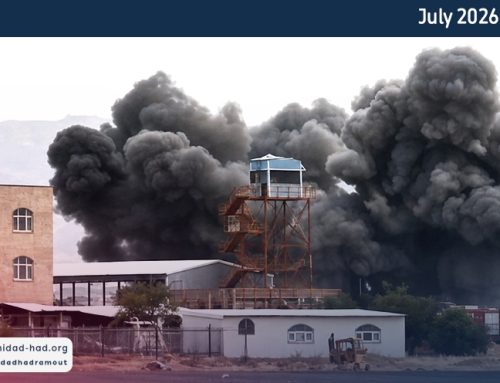
At the national level, a human rights investigation documented the explosion of a Houthi weapons depot in the middle of a residential neighbourhood in Sana’a on May 22, leaving more than 500 dead and wounded, after storing ammunition and mines without precautions, which was considered a war crime and the use of civilians as human shields, amidst the Houthis’ media blackout and secrecy surrounding the incident. In the port of Hodeidah, the Israeli occupation navy launched attacks targeting Houthi facilities in response to the firing of rockets and drones towards the occupied territories. The security committee in Marib also pledged to strongly confront any subversive practices in the governorate or the cutting of the Marib-Hadramout Road, following a series of attacks targeting travellers and fuel tankers. These developments highlight the overlap between security and military issues and the challenges of smuggling and targeting civilians, amid efforts by various authorities to establish security and stability.
News Briefs:
Sunday, June 1:
Disruptive activity has stopped the 33 kV power transmission lines at the Marib Gas Station, which led to a power outage in the city.
Tuesday, June 3:
An investigation by SAM revealed that the explosion of a Houthi weapons store in “Sarf” neighbourhood of Sana’a on May 22 resulted in more than 500 civilian deaths and injuries, which constitutes a war crime requiring international investigation.
Tuesday, June 10:
The spokesperson for the Israeli occupation army announced that navy missile ships attacked Houthi targets in Hodeidah port on the Red Sea in response to the launch of missiles and drones toward occupied territories.
The Al-Qaeda branch resumed its propaganda activities by taking advantage of Gaza events, with its leader Saad bin Atef al-Awlaki issuing threatening messages to Trump and Musk, considering “tit-for-tat” treatment legitimate in response to the events.
Wednesday, June 11:
Security at the Al-Wadiah Port announced the seizure of 1,005,300 narcotic tablets hidden in a refrigerated truck headed to Saudi Arabia. It also stated that it had previously prevented the smuggling of 15,000 Captagon tablets, four kilograms of hashish, and 327 tablets in a bus.
Saturday, June 14:
Saleh Ahmed Ali Al-Suri (47) was killed by a sniper belonging to Houthi group while grazing his sheep in Shabwah Governorate.
Sunday, June 15:
The Armed Forces Media Center announced that it had defeated an infiltration attempt by Houthi elements on the Hawishyan front in Al-Jawf Governorate, after rejecting an attack supported by heavy fire from drones.
Tuesday, June 17:
The police reported seizing two boats off the coast of Kida in Radhum, Shabwah, carrying 530 Ethiopian migrants, including women and children. Their identities were recorded, and their transfer to the relevant humanitarian and legal authorities was coordinated.
Thursday, June 19:
The security committee in Marib has undertaken to pursue disruptive elements who block roads and target travellers on the international road (Marib-Hadhramout).
Saudi Arabian border forces stopped 1.3 tons of qat coming from Yemen in ten separate operations and caught 28 people from Yemen and Ethiopia who were breaking the law.
Sunday, June 22:
The Airwars Observatory reported that 242 civilians were killed in 52 days of the US campaign “Operation Decisive Storm” in Yemen, a figure close to the total civilian casualties in Yemen resulting from US operations over 23 years.
Tuesday, June 24:
Security forces in Shabwah arrested a wanted man accused of a crime dating back to May 31, 2018, while he was attempting to obtain a passport from the Immigration Department in Ataq.
The President of the Presidential Leadership Council, Rashad al-Alimi, chaired a meeting of the Supreme Security Committee attended by the ministers of defence and interior and the governors of Aden, Lahj, Al-Dhala’, and Abyan. They discussed intensive measures to combat terrorism, smuggling, and organized crime.
Wednesday, June 25:
The Immigration and Passport Authority in Aden launched an electronic visa system with support from the United States and the International Organization for Migration via the yemenevisa.org platform, covering about 85% of automation tools for passport, citizenship, and border control services.
Thursday, June 26:
Security forces working for Dar Sa’ad police chief, Masjed Omar Bin Al-Khattab in Mansoura, Aden, and took the Imam; Sheikh Muhammad Al-Kazmi, to an unknown location without giving any reasons.
Friday, June 27:
The national army forced back an attack by the Houthi group on a position in the Taiz suburbs. The attempt failed after heavy fighting that left some Houthis dead and wounded.
Sunday, June 29:
Hadhramaut Tribal Alliance issued Resolution No. (2) of 2025 to form the “First Brigade” of the Hadhramout Protection Forces. The resolution appointed Brigadier General; Al-Jawid Salmin Barashid as commander of the brigade, Brigadier General; Aman Al-Habashi as chief of staff, and Brigadier General; Saleh Al-Ali as operations officer.
The leadership of the “Homeland Shield” forces in Al-Mahra recorded a significant number of soldiers refusing to participate in training courses in Qishn district, prompting it to issue an urgent warning that those who fail to participate will be dismissed and their salaries suspended.
The Ministry of Interior in Aden has issued a directive to prevent the issuance of any first-time passports or amendments to passports until after the smart electronic card has been issued.
Monday, June 30:
Brigadier General Abdulrabuh Laqab appeared in public for the first time since August 2022, inspecting the reserve brigade camp in Shabwah and emphasizing the importance of increasing combat readiness and training to confront the Houthi group.
Friday, June 6:
The Puntland authorities have released 26 Yemeni fishermen after arresting them in Burqal, Somalia. The Ministry of Fisheries, the Yemeni Embassy in Mogadishu, and state experts coordinated to reduce the fines imposed and pay them on behalf of the fishermen.
Wednesday, June 11:
Masam Mine Action Project in Yemen has continued to remove 1,139 mines and unexploded remnants of war during the first week of June 2025, including 56 anti-tank mines, one anti-personnel mine, 1,080 unexploded remnants of war, and two explosive devices. Aden recorded 19,000 items, Marib 53 mines, Shabwah 17 pieces of ammunition, and Taiz 60 pieces of ammunition.
Thursday, June 12:
Yemen Airways confirmed that the Aden office’s refusal to sell tickets to passengers from Sana’a had no legal basis and apologized to those affected. It announced that it would pursue legal action against those responsible.
Tuesday, June 17:
The Ministry of Interior has recorded 85 traffic accidents in the liberated governorates during the first half of June, resulting in 33 deaths, 1,200 injuries, and material losses of over 420 million Yemeni riyals. The accidents were caused by excessive speed, dangerous overtaking, and poor infrastructure, along with a lack of monitoring and awareness measures to reduce accidents.
Wednesday, June 18:
The World Health Organization announced that 18,286 suspected cases of cholera and acute watery diarrhea had been recorded in Yemen as of May 25, 2025, with a 297% increase in infections during May compared to April, reinforcing Yemen’s ranking among the top five countries worldwide in terms of the spread of the disease.
Saturday, June 21:
The United Nations documented 83,500 grave violations against 4,500 Yemeni children in 2024, in addition to 4,200 previous violations, holding the parties to the conflict responsible for exposing children to danger and calling for the release of detainees and facilitating their social and economic reintegration.
Sunday, June 22:
The United Nations agencies FAO, WFP, and UNICEF warned that 4.95 million people face acute food insecurity in the southern provinces between May and August 2025, including 1.5 million in emergency situations. The agencies expect the number to rise to 5.38 million if aid delays continue amid conflict and inflation.
Monday, June 23:
The President of Al-Mahra University; Dr. Anwar Kalashat, held a meeting with the Director of the Academic Development and Quality Assurance Center, the Vice Presidents, and the Secretary General to discuss the formation of the Higher Council for Quality, the development of program standards, and graduate specifications.
The Masam project announced that mine clearance teams had removed 99,603 mines and unexploded remnants of war as of June 20, including 51,100 anti-tank mines, 38,503 pieces of ammunition, and 43,200 explosive devices over the past week. The teams cleared 315,710 square meters this month, bringing the total to 67.7 million square meters since the project began.
Tuesday, June 24:
The Yemeni Ministry of Local Administration launched a mutual visit program with Egypt in Cairo as part of the EU-supported SERI project and the United Nations Development Program to promote institutional resilience and decentralization in Yemen.
The United Nations High Commissioner for Refugees (UNHCR) reported that 52,810 Somali refugees returned to their country from Yemen between 2015 and 2025 through the “voluntary return” program. 8,557 refugees returned officially, and 44,253 returned independently. The year 2015 saw the highest number of returns, with 26,383 refugees. The number of Somali refugees residing in Yemen at the end of 2024 was approximately 71,000, representing 64% of the total number of refugees in the country.
Wednesday, June 25:
The European Union announced providing €10 million in aid to Yemen to prevent famine in the country, which is currently experiencing the worst humanitarian and economic crisis in the world. The announcement came after the UN warned that famine could break out in Yemen in the coming months.
Friday, June 27:
The Doan Foundation for Mud Architecture announced the completion of comprehensive restoration work on the historic Al-Qaiti Palace in Al-Qatan, funded by International Alliance for the Protection of heritage in Conflict Areas (ALIPH).
Monday, June 30:
The Dutch government provided a grant of $1.8 million to support the second phase of promote access to justice project and resolve community disputes. The project will be implemented in Aden and Mukalla to strengthen community and institutional mechanisms for building trust in a comprehensive justice system.